
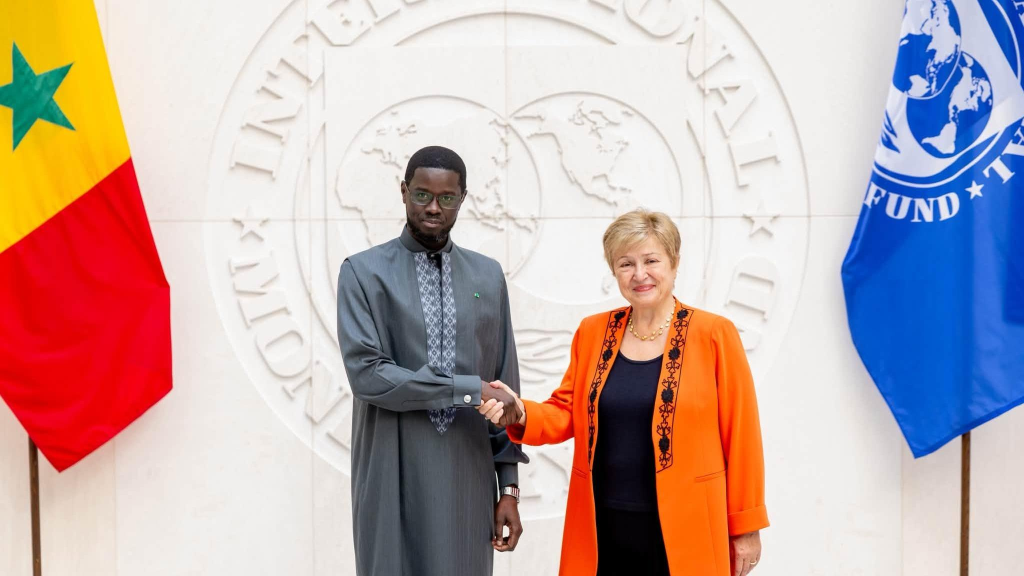
Senegal and the International Monetary Fund reached an agreement on September 1, 2026, which sparked strong reactions. On the surface, it appears to be a significant step forward: $2.2 billion over 36 months (2026-2029), a fiscal consolidation program, and a gradual recovery from the crisis of confidence caused by the disclosure of the hidden debt. In fact, this agreement remains fragile because it is still at the staff level rather than a final disbursement. Its approval by the IMF’s management and Executive Board remains contingent on the implementation of corrective measures and on funding commitments from partners. While these negotiations continue to find a long-term solution, ordinary citizens continue to bear the weight and pressure of inflation, rising energy costs, soaring utility bills, food prices, and devastating floods.
Government’s efforts To Restore Confidence of Its Financial Partners
Following the discovery of more than $11 billion in undisclosed debt at the end of 2023 from the statistical report on the total debt stock , the IMF suspended its previous $1.8 billion program to the country, leaving a significant public financial constraint. The administration of President Bassirou Diomaye Faye is working to restore investors’ confidence by taking decisive corrective actions such as better debt management, debt sustainability, and fiscal transparency. and full disclosure of the total debt stock of the central government and the disaggregated debt of the state-owned entities.
Public Debt Burden and Fiscal Sustainability Challenges
Senegal faces a significant budget deficit, driven largely by dwindling revenue, past high debt levels, and significant refinancing needs. The central government’s outstanding debt totaled 23,667 billion FCFA, or 119.0% of GDP as at the end of 2024. Including the liabilities of the quasi-public sector, estimated at 1,917 billion FCFA, total public debt stood at 25,583 billion FCFA, or 128.6% of GDP. These figures put Senegal well above the regional average of 64.7% of GDP in 2025, according to the IMF’s report on the West African Economic and Monetary Union (UEMOA).
This situation exacerbates the strain on the public purse. In this context, the issue of debt is the central focus of the new agreement. Indeed, the agreement cannot be separated from Senegal’s Debt Treatment Plan , which aims to restore the debt profile on a sustainable basis and improve its sustainability. The announced use of an enhanced version of the G20 Common Framework should, in particular, facilitate engagement with creditors. This approach thus aims to ease financial constraints while maintaining market confidence. The challenge now is to convert this easing of financial constraints into sustainable fiscal flexibility, without compromising the stability of the economy’s financing.
Restoring Fiscal Flexibility: A Prerequisite for Sustainable Recovery
Beyond debt resolution, the agreement’s success will depend on the government’s ability to rebuild sufficient fiscal flexibility to sustainably finance its priorities. The government presents the Debt Treatment Plan as a means to gradually free up resources for investment and the settlement of arrears. Thus, a budget allocation of 300 billion FCFA has been announced to settle outstanding debts owed to businesses. Furthermore, the government notes that 35 billion FCFA are earmarked in the 2026 budget for cash transfers to vulnerable households, in line with the stated objective of preserving social safety nets. However, these budgetary margins will only produce lasting effects if the government simultaneously manages to curb inefficient spending, boost its revenues without stifling economic activity, and prevent the re-accumulation of excessive debt.
What the Program Asks of Senegal
The agreement requires Senegalese authorities to take decisive corrective actions in support of its request for a waiver related to the misreported debt while subject to approval by IMF management and its board.
Senegalese officials should be committed to taking the reform measures aimed at avoiding a similar case and should focus on better debt management and fiscal transparency. The authorities should also be working on a revised budget meant to rationalize spending, though this would not affect access to public services in the short term.
 BudgIT Senegal’s Recommendations
“Senegal has made encouraging progress in strengthening the economy and improving the outlook for investments, jobs and growth,” the IMF chief Kristalina Georgieva said in a statement.
While we welcome the progress made by both the Senegalese authorities and the International Monetary Fund to work out a sustainable way out of this situation, the government must prioritize addressing the country’s growing debt burden through deliberate policy action to strengthen fiscal sustainability , public investments, jobs creation and economic growth.
- BudgIt Senegal recommends that the government should protect social spending and vulnerable populations by maintaining, within the framework of fiscal consolidation, funding allocated to health, education, and social protection. This approach would help ensure that adjustment measures do not place a disproportionate burden on the poorest households.
- We also recommend that the government channel the savings generated toward productive investment. The resources freed up by the Debt Treatment Plan should thus be allocated primarily to projects that create jobs and add value, while limiting unproductive spending and unjustified recurring expenses.
- While BudgIT Senegal recommends that the government should undertake fiscal reforms by broadening the tax base rather than increasing the rate, however , We strongly believe that low income earners should not be the ones to bear the brunt. Such an approach, based in particular on combating tax evasion and improving tax collection, would thus make it possible to generate more fiscal revenue without increasing the burden on current taxpayers.
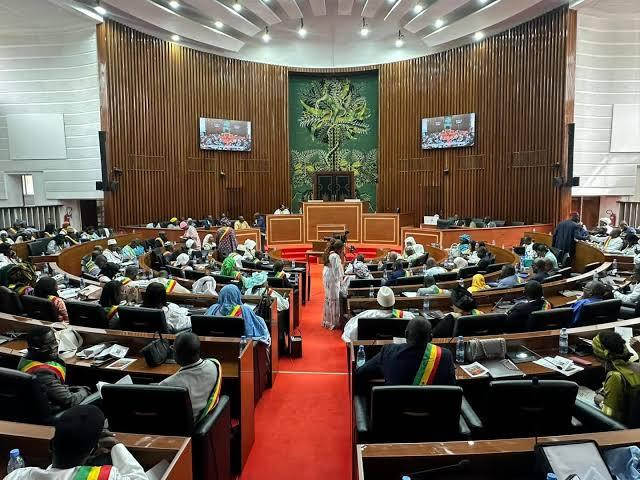
- Finally, BudgIT Senegal strongly recommends regular parliamentary and public oversight through independent monitoring of the implementation of the program’s commitments, as well as the publication of progress reports accessible to the general public.
Conclusion
Senegal can still regain investor confidence, despite serious and concerning developments in its soaring debt servicing as long as the government manages to adopt a budget this year that drastically cuts spending and the deficit and the markets will be reassured by this concrete step toward fiscal consolidation.