
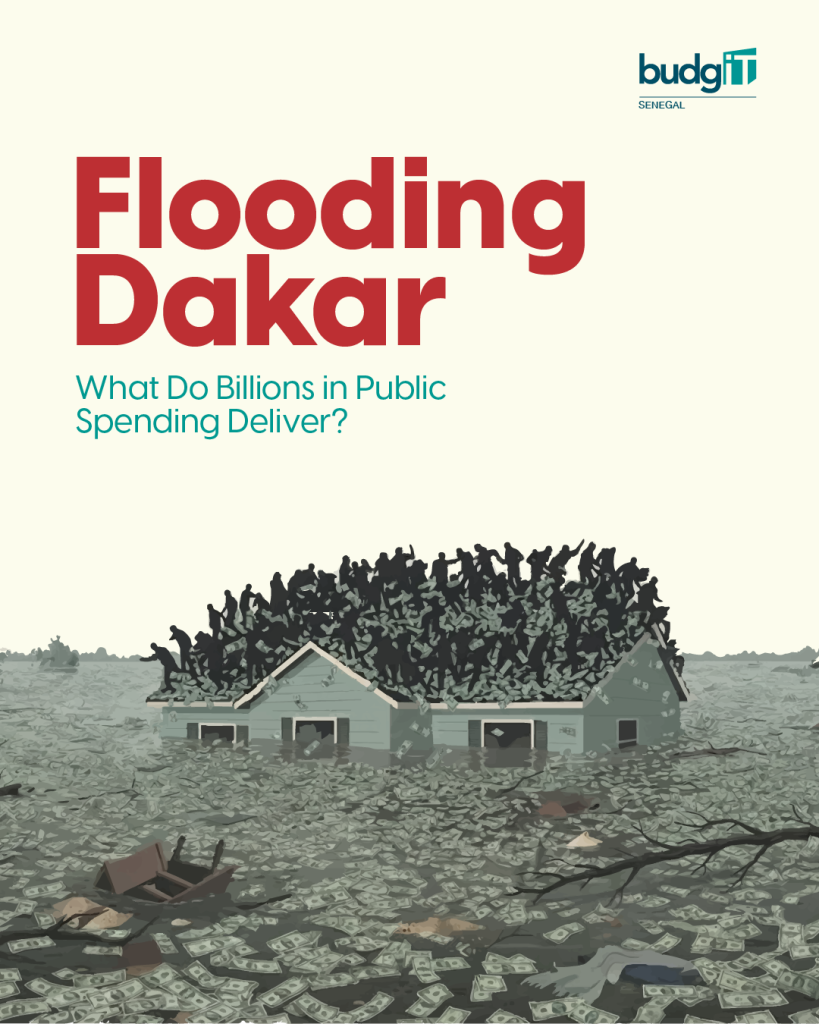
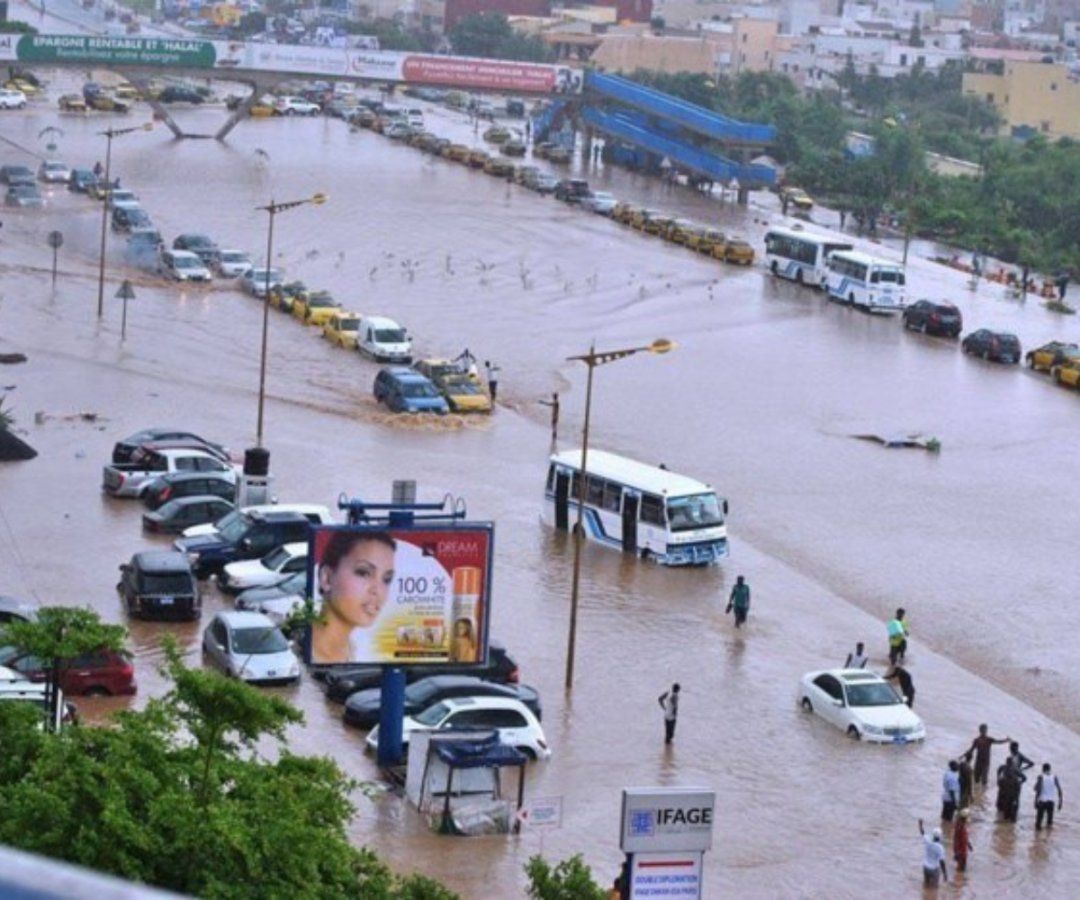
Every rainy season, Dakar faces the same scenario: impassable roads, flooded neighborhoods, damaged homes and disrupted economic activities. Yet the risk is neither new nor unknown. Since 2012, the government has implemented programmes and mobilized resources to prevent and manage flooding. More than a decade later, however, the same scenes continue to recur. This raises questions about the ability of public spending to deliver sustainable results. Between resources mobilized, project implementation and outcomes on the ground, what do the figures tell us about the effectiveness of the public response?
Why is Dakar particularly exposed to flooding?
The answer lies in the combination of several geographical and urban characteristics. The region includes low-lying areas, natural depressions, former Niayes areas (agricultural zones) and, in some locations, a groundwater table close to the surface. These characteristics limit water infiltration and favor water accumulation.
Rapid urbanization further exacerbates the problem. The expansion of roads, buildings and other impermeable surfaces reduces the soil’s ability to absorb rainfall and accelerates runoff. According to ONAS, around forty years ago, 90% of rainfall was absorbed by the soil and 10% ran off. Today, the situation is estimated to be almost reversed: 90% runoff compared with only 10% infiltration.
Dakar therefore combines these factors, which make stormwater management particularly challenging.
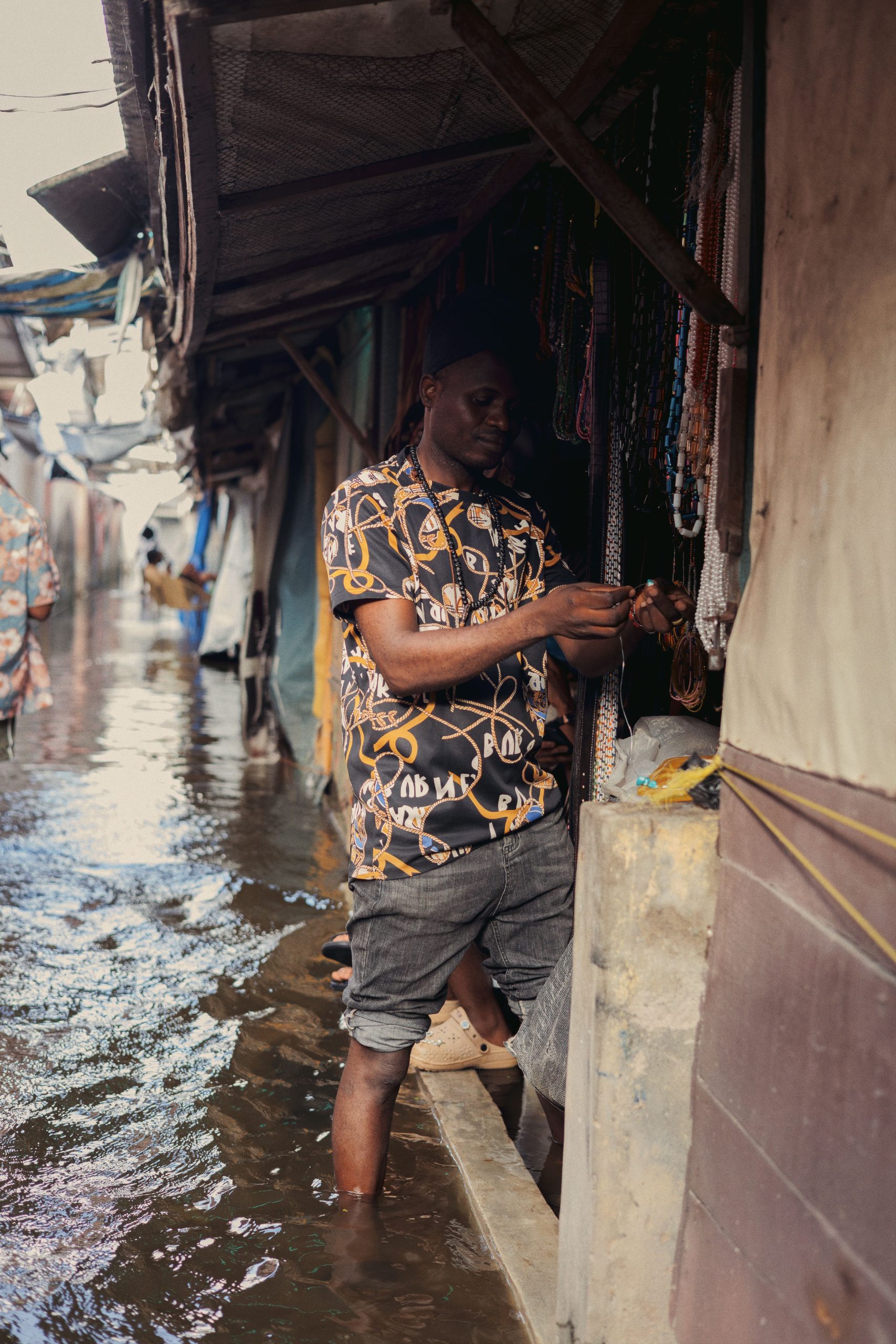
Since 2012: Resources Mobilised and a Policy That Continues
The fight against flooding took a major turn in 2012 with the launch of the Ten-Year Flood Management Programme (PDGI 2012–2022). Focused on drainage, water storage and pumping, the programme also provided for the restructuring of vulnerable areas and the relocation of affected populations.
Since 2022, this policy has continued through several interventions, notably PROGEP, PGIIS and the Priority Action Matrix (PAM). In 2025, budget documents provided for CFAF 66.98 billion for various programmes related to flood and drought risks. This amount was not exclusively dedicated to flooding. Among the allocations directly associated with flood risk were CFAF 22.8 billion for PROGEP 2, CFAF 3.11 billion for PGIIS and CFAF 2.6 billion for the MAP.
What Was Actually Executed?
Budget allocations are only meaningful if they translate into protection on the ground. Yet the latest execution data raise serious questions about the pace at which planned interventions are being delivered.
By the end of September 2025, CFAF 5.6 billion had been executed across three budget lines directly related to flood management: CFAF 220 million for the PGIIS, CFAF 3.9 billion for the Priority Action Matrix (MAP), and CFAF 1.5 billion for protective dikes and the resettlement of affected populations.
This figure must be interpreted carefully: CFAF 5.6 billion is not total flood-related expenditure for 2025. It covers only these three lines and cannot be used to calculate the overall execution rate. However, it shows that having funds programmed in the budget is not the same as having interventions delivered and operational.
For BudgIT, this distinction is critical. People do not benefit from a budget allocation; they benefit from a functioning drainage system, a working pump, a completed basin or a protective structure delivered before the water arrives. When interventions are delayed, the consequences are borne by households already living in vulnerable areas.
The government itself acknowledged implementation problems in 2025, calling for the acceleration of ongoing drainage works, temporary measures where projects could not be completed on time, and the settlement of outstanding payments owed to contractors. It also requested that MAP resources be increased by at least 50% to address urgent needs.
The scale of the problem makes these delays difficult to dismiss as a purely administrative issue. The government’s medium-term budget document estimates average annual flood losses at CFAF 47.89 billion. Meanwhile, after the 2025 rainy season, 8,390 households, around 75,510 people, had received government assistance, with total support reaching CFAF 1.614 billion.
After more than a decade of public intervention, the question is no longer simply how much money has been committed, but whether that money is reaching its intended purpose on time and with measurable results for the people most exposed to flooding.
 Beyond the Rain: Restoring Accountability
Flood management must also be understood as a question of citizenship and political accountability. Flood-prone communities are not invisible populations: they are citizens who participate in elections, contribute to the economy and repeatedly make their concerns known. Yet too often, political attention becomes most visible when the rains arrive or when campaigns return. In 2025, for example, the President visited Thiaroye-sur-Mer after flooding and announced urgent measures for affected residents. The responsibility of public institutions, however, should not begin with the first flooded street. It should begin with listening to these communities before disaster strikes, acting on their concerns and reporting back on what has been done. A citizen should not have to wait for water to enter their home before their voice becomes a policy priority.
Accountability is also a two-way responsibility. The government must anticipate, explain its choices and deliver on its commitments; citizens, in turn, must take an active interest in how their neighbourhoods are planned, how public money is used and whether promised solutions materialise. This means asking questions, using available public information, reporting failing infrastructure and demanding evidence rather than waiting for another emergency. The goal is not simply to build more, but to build trust through a public system where decisions are visible, commitments can be followed and communities have a voice. A flood should never be the first moment when citizens and the government start talking about the same problem.