
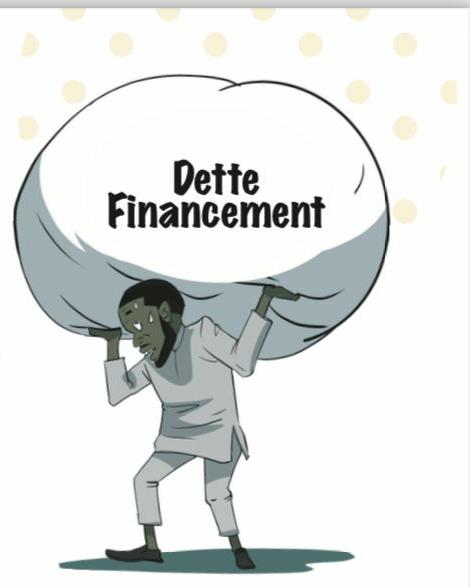
Senegal’s newly released Public Debt Stock Report provides the most detailed overview of the country’s financial position to date. Between 2019 and 2024, public debt more than doubled, reaching CFAF 25.6 trillion and pushing the debt-to-GDP ratio to 128.6%, well above the West Africa Economic Monetary Union(WAEMU) convergence threshold. The publication is an important step towards greater transparency, but it also raises urgent questions about debt sustainability and the country’s fiscal future.
Public Debt Has Doubled in Five Years
The most striking indicator is undoubtedly the trend in total public-sector debt, which rose from 11,219 billion CFA francs in 2019 to 25,583 billion CFA francs in 2024, an increase of 128% over the course of five years. This trend is all the more concerning as it is accompanied by an equally sharp deterioration in the debt-to-GDP ratio, which rose from 81.8% to 128.6%, thus far exceeding the 70% threshold set in Article 7 of the West African Economic and Monetary Union Convergence Pact.
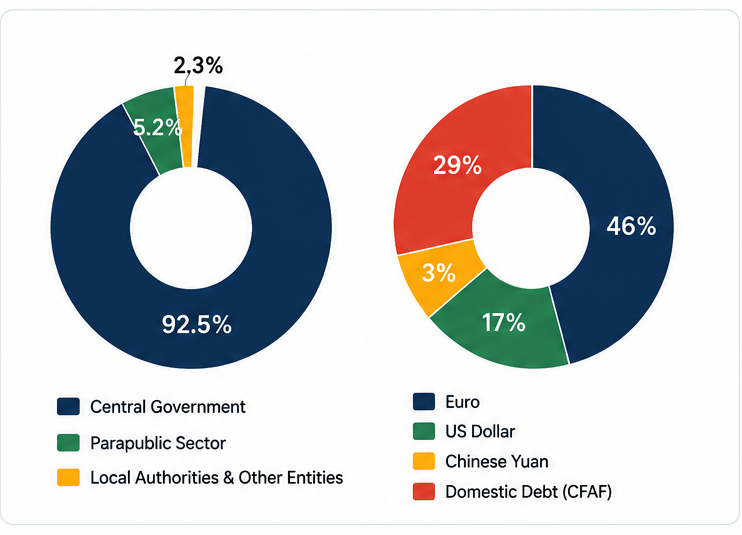
What stands out in this structure is the concentration of debt within the central government, which alone will account for 92.5% of total debt in 2024. But the public sector is not far behind: its debt is growing even faster (+135%), with entities such as National Petroleum company PETROSEN (660.2 billion), SOGEPA (299 billion), and National Energy Company SENELEC (227.6 billion) weighing heavily on the consolidated balance sheet.
 Dependence on Foreign Currencies: A Factor in Macroeconomic Instability
The public debt statistical report also reveals a structural vulnerability. In fact, 71% of total debt is denominated in foreign currencies (including 46% in euros, 17% in dollars, and 3% in yuan). This predominance exposes Senegal to significant exchange rate risk, as even a minor currency fluctuation could automatically increase the real debt burden by several hundred billion CFA francs. Furthermore, while domestic debt is smaller in volume (29% of the outstanding debt), it has a much shorter average maturity (3.6 years compared to 8.7 years for external debt), which creates a recurring refinancing risk in the regional market and exposes the government to interest rate fluctuations. This dual vulnerability, external due to exchange rates and internal due to maturity, directly calls into question the sustainability of the debt trajectory over the medium and long term.
Debt Service Weighs Heavily on The National Budget
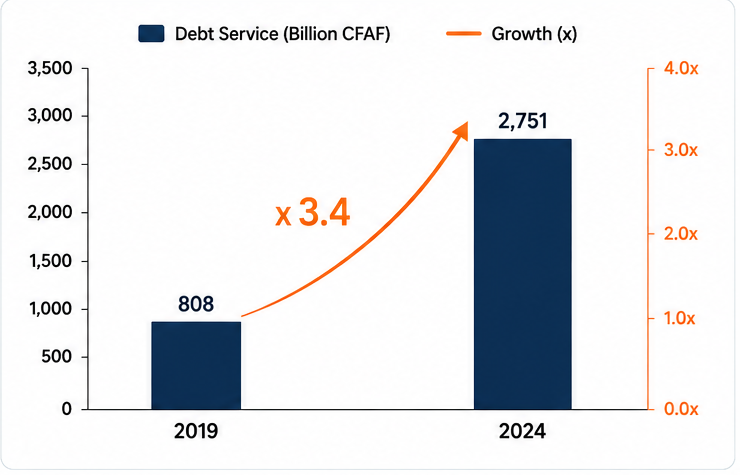
Debt service (principal and interest) has increased 3.4-fold in six years between 2019 and 2024, rising from 808 to 2,751 billion CFA francs. Interest payments, meanwhile, have tripled, reaching 858 billion CFA francs in 2024, an amount that now exceeds the budget allocated to the national education system. This trend reflects a concerning crowding-out effect. As a result, every penny spent on debt repayment is a penny taken away from social spending and investment. The projections in the 2027–2029 Pre Budget Statement confirm this trend, with debt interest expected to reach 25.1% of tax revenue by 2027. In other words, nearly a quarter of tax revenue would continue to be absorbed by interest payments alone at the start of the threshold period, raising questions about the sustainability of the current trajectory and significantly reducing the country’s ability to cope with potential exogenous shocks.
BudgIT Senegal’s Recommendations
While we commend the report release, the government must prioritize addressing the country’s growing debt burden through deliberate policy action to strengthen fiscal sustainability and ensure that public borrowing delivers real value for citizens.
BudgIT Senegal recommends that the government should adopt a more prudent borrowing strategy, ensuring that new loans are contracted only for projects with clear economic and social returns, ones that support long-term growth and improve citizens’ well-being.
We also recommend that transparency and accountability in debt management should be institutionalised through the regular publication of comprehensive debt data, including information on state-owned enterprises and contingent liabilities. Doing so will strengthen public oversight and build confidence in the management of public finances.
There should also be efforts to reduce refinancing and exchange rate risks, which should continue through a better balance between domestic and external borrowing, longer maturities on domestic debt, and the exploration of sustainable financing instruments, such as green, diaspora, and sustainability-linked bonds, where appropriate.
Finally, strengthening domestic revenue mobilisation and accelerating structural reforms in key sectors, including energy, agriculture, and the digital economy, will be essential to grow the economy, reduce reliance on borrowing, and improve Senegal’s capacity to manage its debt sustainably.
The publication of Senegal’s 2019–2024 Public Debt Stock Report is a welcome step toward greater fiscal transparency. However, transparency must be matched by responsible borrowing, stronger oversight, and investments that deliver tangible benefits for citizens. As public debt continues to rise, the government’s priority should be to ensure that every borrowed franc supports sustainable economic growth, strengthens public services, and safeguards the country’s long-term fiscal stability.