
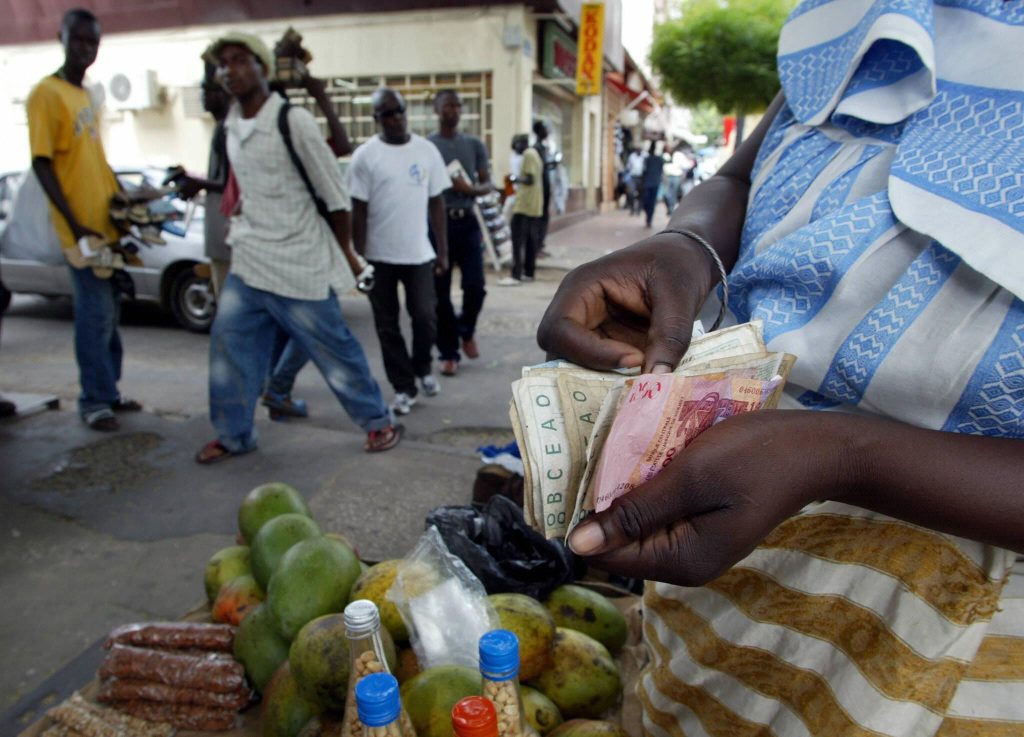
By the end of June 2026, Senegal’s government had collected 2,617.3 billion FCFA and spent 2,874.7 billion FCFA. That leaves a deficit of 257.4 billion FCFA for the first half of the year.
While the figures appear encouraging on the surface, tax collection is up, and the deficit is well within the annual target. However, for citizens, the real question is not how much money the government collects. It is whether that money turns into tangible development, such as classrooms, clinics, water points, and jobs.
The mid-year data presents a mixed picture, with fixed costs absorbing most of the revenue, and investment in public projects running well behind schedule.
Revenue: Strong Collection with some caveats
Revenue reached 44.1% of the annual target by mid-year. Almost all of it came from domestic sources: 2,582.9 billion FCFA, or 45.0% of the annual forecast.
Tax revenue reached 2,458.7 billion FCFA, which is 5.7% of the annual target and 97.9% of the half-year target. That is 17.6% more than in the first half of 2025, driven mainly by direct taxes. Recent tax reforms appear to be working.
Non-tax revenue exceeded the half-year target by 124.2 billion FCFA, about 14 billion above its half-year target (112.9%). Most of that came from state-owned assets and hydrocarbon operations. These are revenues that can swing with oil prices or one-off transactions, so they are not a reliable base for planning.
Meanwhile, the Economic and Social Recovery Plan (PRES) raised only 63.6% of its expected total, a shortfall of 80.4 billion FCFA. Grants, all of them tied to capital projects, reached just 18.0% of the annual forecast.
Overall, revenue mobilization is healthy, but it is partially dependent on one-time revenues, exogenous factors, and tax measures that are not yet fully operational.
Spending: Recurring spending is crowding out investment
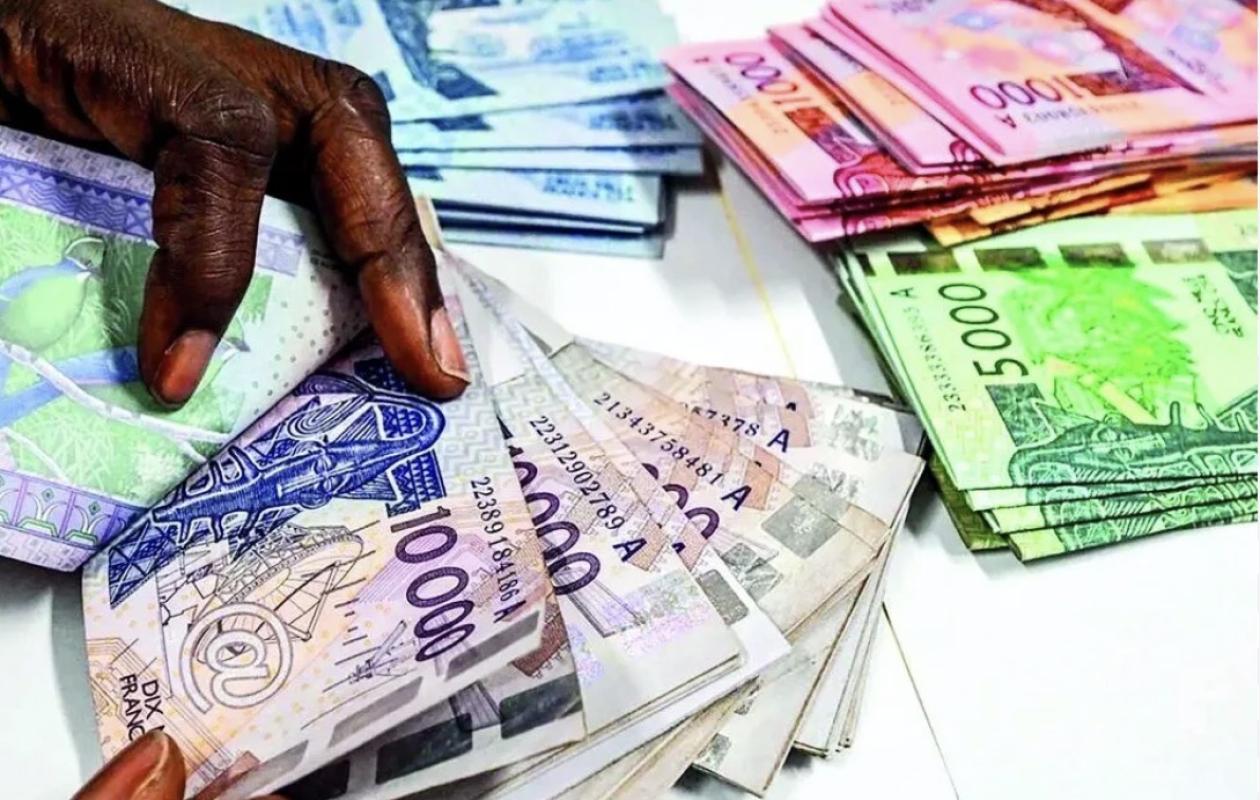
The government spent 2,874.7 billion FCFA in the first half, 40.1% of the annual budget. About three-quarters of that, 2,196.4 billion FCFA, went to recurring costs. Recurring spending has already used up half (50.2%) of its annual allocation.
Three items dominate: salaries (759.6 billion FCFA), current transfers (658.5 billion FCFA), and interest on public debt (621.2 billion FCFA). Together, they absorbed 79% of all the domestic revenue the government collected. Interest payments alone took nearly one franc in every four.
Investment shows a different picture. Capital spending reached only 678.3 billion FCFA, or 24.2% of the annual target. For every franc invested in roads, schools, health facilities, and other projects, the government spent more than three francs on running costs.
Of that capital spending, 397.2 billion FCFA came from domestic resources and 281.1 billion FCFA from external financing. Projects accelerate later in the year, which explains part of the gap. But slow execution also points to weak absorption capacity. It raises the risk of a spending surge in the final months, when projects are harder to monitor and more prone to waste.
A Contained Deficit in a Fiscal Environment Still Exposed to Several Risks
The mid-year deficit stood at 257.4 billion FCFA, or 1.1% of GDP, against an annual target of 5.37%. At first glance, that suggests public finances are under control.
But the deficit looks small largely because investment is lagging. If capital spending catches up in the second half, as the government expects, the deficit will widen quickly. The real test of fiscal discipline comes at year-end, not at mid-year.
Other pressures are building. The energy sector received 165.5 billion FCFA in transfers, about a quarter of all current transfers. Geopolitical tensions and rising energy prices could push that figure higher.
Debt is the other concern. The Court of Auditors’ 2025 audit found that debt and deficits had been under-reported in previous years. That makes the completeness of today’s figures a public question in its own right. [TEAM: add the current debt-to-GDP ratio, and confirm whether these figures cover all public debt, including borrowing previously kept off-budget.]
Keeping the deficit on track will depend on three things: making the PRES measures work, regularly reviewing energy subsidies, and tightening control over how money is spent.
What Parliament, government, and citizens should watch
The 2027 budget will soon go before Parliament. That makes the coming weeks the right moment to act on these findings.
- Parliament’s Finance Committee should require a full report on energy sector transfers before approving new subsidy allocations: how much went to SENELEC and fuel importers, on what criteria, and with what results.
- The Ministry of Finance should publish measure-by-measure results for the PRES, explaining the 80.4 billion FCFA shortfall and which measures are falling short.
- The Ministry of Finance should also disclose hydrocarbon revenues in detail: what was received, from which operations, and where it was allocated.
- Citizens and civil society organisations should track named capital projects in health, education, and water and sanitation through the third- and fourth-quarter reports. The question is simple: Does the promised catch-up in investment actually happen?
Senegal’s recent reforms are raising more revenue, and that deserves credit. But collecting money is only half the job. Success should be measured by whether public resources are managed openly, spent well, and felt in people’s daily lives.
As the government works through the rest of its 2026 budget, strong public oversight matters just as much as strong revenue.